


Lower Back Pain: Causes, Symptoms & How to Find Relief
What Is Lower Back Pain?
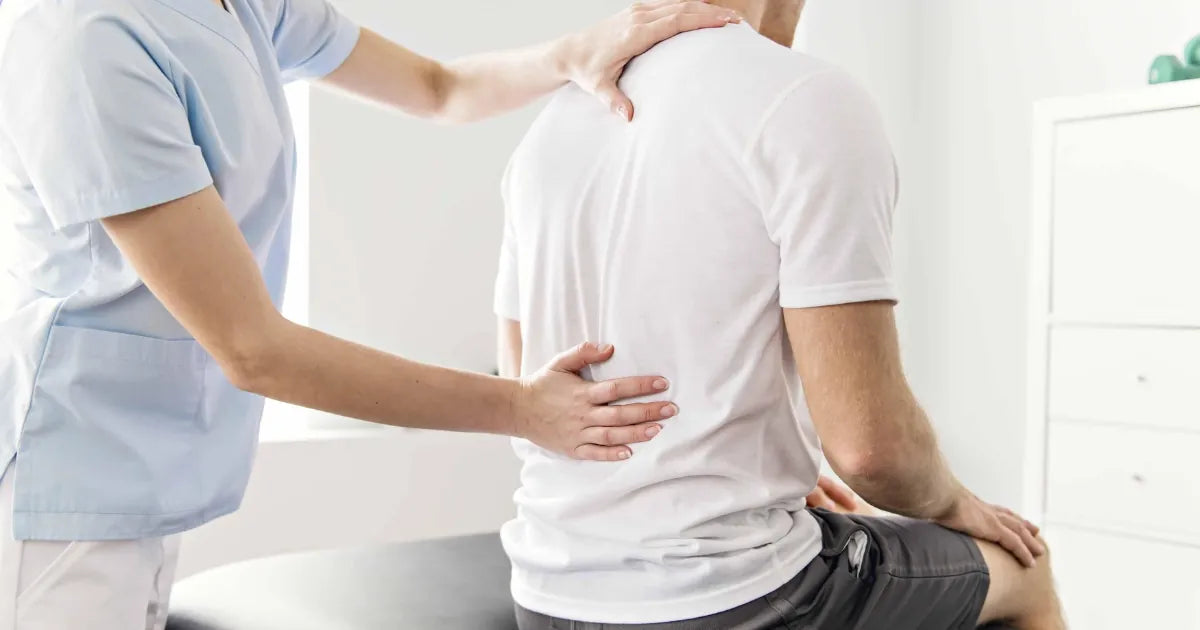
Lower back pain is one of the most common musculoskeletal complaints in the world, with up to 84% of adults experiencing it at some point in their lives. It's defined as pain, stiffness, or discomfort in the region between the bottom of the rib cage and the top of the buttocks, involving the lumbar spine and the muscles, ligaments, and discs surrounding it.
What makes lower back pain so persistent and so frustrating is that it rarely has a single, obvious cause. The lumbar spine sits at the intersection of your upper and lower body. Everything above it (posture, breathing, shoulder tension) and below it (hips, pelvis, legs) affects how it functions. When any one element is off, the low back is often the first place to feel it.
Most people are told it's a disc problem, a structural issue, or simply part of aging. And sometimes those explanations are accurate. But in many cases, the true driver is something that gets overlooked entirely: muscle tension in the deep hip flexors, specifically the iliacus and psoas, that quietly pulls the pelvis out of alignment and loads the lumbar spine.
Understanding what's really happening in your lower back is the first step toward addressing it.
READ MORE: What is the Iliacus Muscle?
What Causes Lower Back Pain?
Lower back pain has many contributing causes, and they rarely act in isolation. The most common fall into three categories: lifestyle, postural, and biomechanical.
Prolonged sitting is at the top of the list. When you sit for hours, your hip flexors, including the iliacus and psoas, remain in a shortened position and active. Over time, they adapt to that shortened state and stay contracted, pulling the pelvis forward and loading the lumbar spine even when you stand or rest.
Postural habits compound the problem. Anterior pelvic tilt, where the front of the pelvis tips downward and the low back arches excessively, is one of the most common patterns seen in people with chronic lower back pain. It increases compressive forces on the lumbar discs and facet joints. This happens due to a lack of activation of the abdominal and glute muscles and tight hip flexors just mentioned, which pull the pelvis into that position.
Muscle tension and imbalance are another major driver. Tight hip flexors and weak glutes create an inefficient movement pattern that forces the low back to compensate. When the glutes can't do their job, the lumbar muscles pick up the slack, and they pay the price.
Other contributing factors include overuse from activities such as running, cycling, or heavy lifting without adequate recovery; core instability that leaves the lumbar spine unsupported; and structural issues such as arthritis and disc herniation or degenerative disc disease. In many cases, multiple factors are at play simultaneously, which is why a single treatment approach rarely tells the whole story.
Symptoms of Lower Back Pain
Lower back pain presents differently depending on the underlying cause. Some people experience a constant dull ache; others describe sharp, stabbing pain that comes on with movement. It can be confined to one side or spread across the entire lower back.
Common symptoms include:
- A deep, persistent ache in the lumbar region, especially after sitting or standing for extended periods
- Stiffness or difficulty bending forward or backward
- Pain that radiates into the buttocks, hips, or down one or both legs; a sign that nerve roots may be involved
- Muscle spasms or tightening in the low back, particularly after physical activity
- Reduced range of motion, such as feeling "locked up" or stiff first thing in the morning
- Discomfort that eases with gentle movement but returns with prolonged rest or sitting
If pain radiates down the leg with numbness, tingling, leg weakness, or bowel and bladder dysfunction, this may indicate nerve or spinal cord involvement and warrants attention from a healthcare provider.
READ MORE: What is the Sciatic Nerve and 3 Places it Gets Pinched
How Is Lower Back Pain Diagnosed?
If you see a clinician for lower back pain, diagnosis typically begins with a thorough physical examination. They'll assess your range of motion, posture, and gait, and perform manual tests to identify which movements provoke or relieve your pain.
A clinician may also evaluate hip flexor and core muscle function. Muscle tension in the iliacus and psoas, while often overlooked, frequently shows up on movement assessments as limited hip extension, anterior pelvic tilt, or asymmetry between sides.
Imaging (X-ray, MRI, or CT scan) may be ordered if there's suspicion of structural involvement: disc herniation, fracture, or nerve compression. It's worth noting, however, that imaging findings don't always correlate with pain levels. Many people with significant disc changes or arthritis experience no symptoms; others with "normal" imaging have significant pain.
A thorough diagnosis should include a detailed assessment, including palpation and movement patterns. Not just a picture of your spine, but an understanding of how your body moves and where muscle tension patterns are creating load.
Treatment Options
There's no shortage of treatment options for lower back pain, which is both good news and a source of frustration for the millions of people who have tried several without lasting relief.
Physical therapy is often the first recommendation, and with good reason. A physical therapist can identify movement pattern breakdowns, guide targeted strengthening and mobility work, and apply manual therapy techniques that directly address muscle tension. The limitation is frequency, as most people can't maintain the consistency (including the cost) of hands-on care needed for lasting change. Additionally, some people find themselves in the hands of physical therapists who don't do or don't have the time to do hands-on work, and then muscle tension won't be addressed.

Stretching and mobility work help maintain range of motion, particularly in the hips, hamstrings, and thoracic spine. However, stretching alone rarely resolves chronic lower back pain, because it doesn't change the underlying tension-holding patterns in deep muscles like the psoas, iliacus, piriformis, quadratus lumborum, and tensor fascia latae (TFL).
Strengthening exercises, particularly of the glutes, core, and hip stabilizers, reduce the load placed on the lumbar spine during movement. But strengthening tight, inhibited muscles without first releasing them is an uphill battle. Tight muscles are weak muscles.
Chiropractic adjustments realign the spine and provide relief; however, if muscle tension is continuously pulling the pelvis and vertebrae out of alignment, that relief tends to be short-lived. Release the tension, and adjustments hold longer.
Lifestyle modifications such as reducing prolonged sitting, improving sleep positions, or managing load can reduce the cumulative stress on the spine throughout the day. However, trying to maintain an aligned posture is difficult when you're fighting against the tug of muscle tension.
Other healing modalities such as infrared laser, therapeutic ultrasound, and electrical stimulation can also play a supportive role. These approaches help relax muscle tissue, increase circulation, and facilitate the body's natural healing process. They are often used alongside manual therapy and exercise to enhance recovery, particularly in cases where pain or inflammation is limiting progress.
An effective approach to lower back pain typically combines elements from several of these categories and addresses both the muscles and the movement patterns driving the problem.
How Iliacus and Psoas Tension Contributes to Lower Back Pain
Most lower back pain conversations focus on the spine itself: the discs, the vertebrae, the facet joints. But there's a muscle group sitting at the center of chronic lower back pain that rarely gets the attention it deserves: the iliacus and psoas.
Together, these muscles form the deep hip flexor group. The psoas originates at the lumbar vertebrae and runs down through the front of the pelvis. The iliacus attaches inside the bowl of the pelvis and joins the psoas near the groin. Because of their attachment points directly to the lumbar spine and pelvis, when they hold chronic tension, the downstream effects on the lower back are significant.
Here's the mechanism. When the iliacus is chronically tight, it pulls the front of the pelvis downward, creating anterior pelvic tilt. That forward rotation of the pelvis increases the arch in the lumbar spine, compressing the facet joints and increasing load on the lumbar discs and nerves. The muscles of the lower back respond by contracting to compensate, creating the familiar cycle of tension and pain.
At the same time, a tight psoas, which attaches directly to the lumbar vertebrae, pulls those vertebrae into a twist and a bend with every step. This is why so many people with lower back pain feel it worsen after walking or standing for extended periods. It's not structural deterioration. It's muscle tension creating load that the spine has to bear.
What makes this pattern so persistent is that the iliacus is inaccessible through conventional stretching. Standard hip flexor stretches reach the rectus femoris and the more superficial portion of the psoas, but they can't reach the iliacus at the site of its origin, inside the pelvis. The tension doesn't release. It gets missed. Additionally, stretching just changes the length of the muscle and doesn't necessarily teach it how to relax. The stiffness that improves with a stretch can come back after a few minutes of inactivity.
In order to release the tension in the muscle, prolonged pressure is applied directly to the iliacus using ischemic compression, the same technique physical therapists use in manual therapy. When sustained pressure is held for 90 seconds, the muscle releases its holding pattern. As the iliacus releases, the pelvis realigns, the lumbar spine decompresses, and the downstream tension begins to unwind. In one randomized controlled trial, participants with chronic lower back pain reported 27% pain reduction after just one use (Results may vary).
This doesn't replace physical therapy or other treatments. It addresses the missing piece most approaches miss. Strengthening, stretching, and lifestyle changes are still important alongside muscle release.
READ MORE: What is Ischemic Compression?
How to Relieve Lower Back Pain at Home
These steps won't replace a thorough clinical assessment, but for most people with tension-driven lower back pain, they make a meaningful difference.
Release the iliacus first. Using the Hip Hook (Mark), apply sustained pressure to the iliacus at inside the pelvic bone. Hold for 90 seconds per side. This single step can shift the entire pelvic tension pattern driving your lower back pain, and it's the piece most home routines skip entirely.
Stretch what's been shortened:
- Kneeling hip flexor stretch with a posterior pelvic tilt: hold 60–90 seconds per side to address the psoas
- 90/90 hip stretch or the figure 4 piriformis stretch: for the deep hip rotators and glutes
- Cat-cow and child's pose: to decompress the lumbar spine and restore segmental mobility
Strengthen what's been shut down (after releasing first):
- Glute bridges: to reactivate glutes that have been inhibited by tight hip flexors
- Bird-dog: trains core stability without loading the lumbar spine
- Dead bug variations: for deep core activation with spinal protection
Adjust your daily habits:
- Break up prolonged sitting every 30–45 minutes with a short walk or hip flexor stretch
- Sleep on your side with a pillow between your knees to keep the pelvis neutral; avoid sleeping on your stomach, which increases lumbar extension
- When standing, avoid letting the hips shift forward or locking the knees, both of which increase lumbar arch
Address your thoracic spine. Stiffness in the mid-back is a frequently overlooked driver of lower back load. When the thoracic spine doesn't move freely, the lumbar spine compensates. The Range addresses tight upper body postural muscles to help with thoracic mobility, which can take pressure off the lower back.
When to See a Doctor for Lower Back Pain
Most lower back pain responds well to conservative care. But some presentations require professional evaluation right away. See a doctor if you experience:
- Sudden, severe pain following a fall, accident, or injury
- Pain accompanied by numbness, tingling, or weakness in one or both legs
- Loss of bladder or bowel control; seek emergency care immediately
- Pain that is constant, worsening, or does not improve with any position or rest
- Lower back pain accompanied by unexplained weight loss, fever, or night sweats
- Pain that consistently wakes you from sleep and isn't relieved by position changes
These symptoms may indicate disc herniation with nerve involvement, fracture, infection, or in rare cases, something more serious. Always err on the side of getting it evaluated.
Recommended Tools for Lower Back Pain

For lower back pain driven by muscle tension, two tools work in combination. The Hip Hook (Mark) targets the iliacus, the deep hip flexor that standard stretching can't reach. By releasing the muscle tension pulling the pelvis into anterior tilt, it addresses one of the most common and overlooked drivers of chronic lower back pain. In one randomized controlled trial, participants with chronic low-back pain reported 27% pain reduction after just one use. Results may vary.
The Orbit complements that work by targeting the piriformis and deep hip rotators, the muscles at the back of the hip that often tighten in response to hip flexor tension. When the front of the hip is chronically tight, the back of the hip compensates, and that pattern can contribute to lower back load from both directions. Releasing the posterior hip alongside the iliacus addresses the full tension loop: front and back, working together to restore balance around the pelvis and take pressure off the lumbar spine.
The Range addresses muscular imbalances in the upper body that may contribute to thoracic spine restriction, a frequently overlooked contributor to lower back load. When the mid-back moves freely, the lumbar spine doesn't have to compensate. Together, they form the Full Body Release System: one tool for the primary core, one for the secondary core.
Learn More: Discover the Full Body System
Frequently Asked Questions
Can tight hip flexors cause lower back pain?
Yes. The iliacus and psoas attach directly to the lumbar spine and pelvis. When they're chronically tight, they pull the pelvis into anterior tilt, arching the lumbar spine and compressing the facet joints and discs. That pattern loads the lower back from the inside out. Releasing iliacus and psoas tension may reduce the pelvic pull contributing to your pain.
How long does lower back pain take to go away?
It depends on whether you're dealing with acute or chronic pain. Acute lower back pain, often triggered by a specific incident, typically resolves within 2 to 6 weeks with rest, movement, and soft tissue care. Chronic pain, present for 3 months or more, takes longer and usually won't resolve without addressing the underlying muscle tension patterns driving it. How quickly you improve often comes down to whether the root cause is being treated, not just the symptoms.
What causes lower back pain on just one side?
Usually, asymmetrical muscle tension. The iliacus, psoas, or quadratus lumborum on one side can tighten unevenly, creating a rotational pull on the pelvis that loads just one side of the lumbar spine. SI joint involvement, scoliosis, and uneven movement patterns can also contribute. A physical therapist can help identify whether the driver is muscle tension, structure, or habit.
Is it okay to exercise with lower back pain?
Generally, yes. Gentle movement helps. Complete rest tends to slow recovery, not speed it up. Walking, swimming, and targeted stretching and strengthening are appropriate for most non-severe lower back pain. During an acute flare, avoid high-load movements like heavy deadlifts or squats. If your pain is significant or persistent, check with a healthcare provider before starting something new.
What is the best sleeping position for lower back pain?
Side sleeping with a pillow between the knees is generally the most back-friendly position, as it keeps the pelvis neutral and reduces torque on the lumbar spine. Sleeping on the stomach increases lumbar extension and is not recommended. If you sleep on your back, a pillow under the knees can reduce pressure on the lumbar spine.
References
- Casiano, V. E., Sarwan, G., Dydyk, A. M., & Varacallo, M. (2023). Back pain. In StatPearls. StatPearls Publishing. https://www.ncbi.nlm.nih.gov/books/NBK538173/
- Pizol, G. Z., Miyamoto, G. C., & Cabral, C. M. N. (2024). Hip biomechanics in patients with low back pain, what do we know? A systematic review. BMC Musculoskeletal Disorders, 25, 415. https://doi.org/10.1186/s12891-024-07528-7
- Ceballos-Laita, L., Jiménez-del-Barrio, S., Marín-Zurdo, J., Moreno-Calvo, A., Marín-Boñe, J., Albarova-Corral, M. I., & Estébanez-de-Miguel, E. (2023). The effectiveness of hip interventions in patients with low-back pain: A systematic review and meta-analysis. Brazilian Journal of Physical Therapy, 27(1), 100484. https://doi.org/10.1016/j.bjpt.2022.100484
- Reiner, S. (2025). Aletha Health: Revolutionizing therapeutic strategies for back pain and physical performance [White paper]. Aletha Health. https://alethahealth.com/pages/white-paper


If you're dealing with pain in more than one place; if you have chronic low back pain, sciatica, SI joint pain, hip p...
- HSA/FSA eligible
- 60-day returns
- Free shipping
If you're dealing with pain in more than one place; if you have chronic low back pain, sciatica, ...