


What Is the Iliacus Muscle?
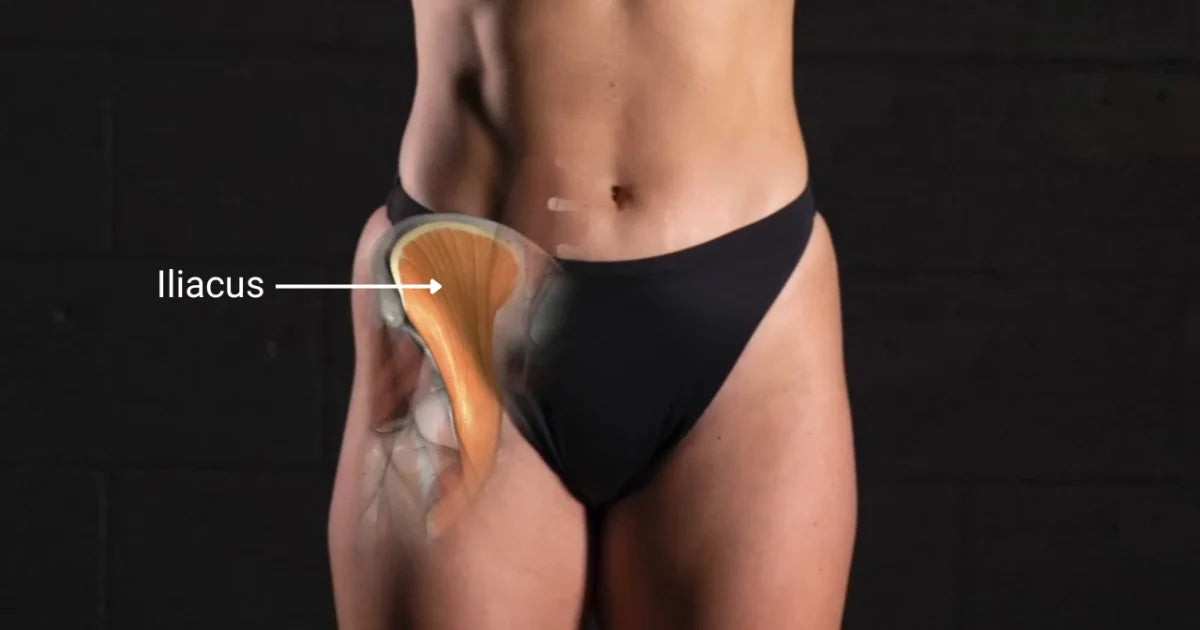
The iliacus is a large, deep hip flexor muscle that sits inside your pelvis, roughly the size of your hand. It connects the inner surface of your pelvis to your femur and drives hip flexion: every time you hold yourself upright in sitting, take a step, climb a stair, or pull your knee toward your chest, your iliacus fires. It also plays a central role in pelvic alignment and spinal stability. When it holds chronic tension, it can rotate your pelvis forward, compress your spine, and create a cascade of pain throughout your body, often without being recognized as the source.
Where Is the Iliacus and What Does It Do?
The iliacus originates along the iliac fossa: the broad, concave inner surface of your ilium, which is the large wing-shaped bone of your pelvis. From there, it travels down and forward, joining with the psoas muscle to form the iliopsoas, before inserting onto the lesser trochanter of the femur on your inner thigh. Together, these two muscles are your body's primary hip flexors. But they aren't the same muscle, and that distinction matters enormously for treatment.
The psoas originates from the lumbar vertebrae and passes through the abdomen. The iliacus originates entirely on the pelvic bone. This means the iliacus sits deeper, is harder to access, and requires a completely different approach to release. Most hip flexor stretches target the psoas. The iliacus is rarely reached.

Functionally, the iliacus does three things: it flexes the hip, helps rotate the thigh laterally, and stabilizes the hip joint during movement. It is also what I call a keystone muscle: a muscle with disproportionate influence on alignment and function throughout the entire body. When it works well, everything downstream tends to work well. When it holds tension, the effects ripple outward from your pelvis in every direction.
That matters because the iliacus is tight in the vast majority of people. Prolonged sitting, repetitive movement patterns, stress, and even poor sleep all contribute to chronic tension buildup in this deep, hidden muscle. And because conventional tools, such as foam rollers, standard stretches, and even many massage techniques, can't reach it effectively, that tension tends to accumulate silently for years.
READ MORE: 5 Signs You Have Tight Hip Flexors
What Happens When the Iliacus Holds Tension?
When your iliacus is chronically tight, it doesn't just cause local discomfort. It pulls your pelvis into an anterior tilt, rotating it forward and downward, which creates excess lordosis in your lower back, alters your spinal curve, compresses your lumbar discs and joints, and changes how every joint above and below the pelvis aligns and loads. This is why iliacus tension often shows up as low back pain, SI joint pain, hip pain, or even knee pain rather than discomfort at the muscle itself.
The cascade continues further. A tight iliacus weakens the glutes through a process called reciprocal inhibition: when a muscle on one side of a joint is chronically contracted, the opposing muscle on the other side is neurologically suppressed. Many people spend years trying to "activate" their glutes without realizing a tight iliacus is the reason they can't. Tight hip flexors also overload the piriformis, a deep hip rotator that sits close to the sciatic nerve, which is why iliacus tension may contribute to sciatic symptoms in some people.
Here's the critical problem: stretching doesn't fix this. Stretching teaches a muscle to lengthen. It doesn't release the chronic resting tension that's pulling your pelvis out of alignment. The technique that works is sustained pressure, held directly on the muscle, which triggers the nervous system to reduce the muscle's resting activation level. Physical therapists use a version of this called ischemic compression, but few practitioners can hold the required pressure long enough within a standard session to produce lasting change.
Steps to address iliacus tension:
- Test your range of motion. Lie on your back and bring one knee toward your chest. Notice how far it travels before you feel resistance. Any pinching, tightness, or discomfort at the front of the hip is your iliacus signaling tension. Repeat on the other side. Remember where that boundary is; you'll use this same test to measure your results after releasing.
- Locate the iliacus. Lying on your back, find the front bony point of your hip (the ASIS, or anterior superior iliac spine) and move just inside the bone. From there, press downward and inward, as if you're pressing towards the inside of the bone. You're looking for a tender spot deep inside the pelvis. When you find it, you'll know.
- Apply sustained pressure. You need a tool designed to reach this depth and hold steady pressure for 90 seconds or more. A foam roller cannot do this. The position of your fingers is awkward and cannot maintain the force required for the full 90 seconds.
- Release, then retest. After releasing both sides, bring each knee to your chest one at a time. Notice the difference in range and ease. That feedback confirms you've accessed the right spot.
- Repeat consistently. Iliacus tension that has built up over years won't release in a single session. Daily or near-daily use, in 1-3 spots on the muscle for just 90 seconds each spot, produces the most lasting results.
- Reactivate and strengthen. Once tension is released, the muscles that were being suppressed, particularly the glutes, can finally respond to training. Incorporate glute activation and hip stability exercises after your release work, not before. This sequence matters: releasing tension first allows strengthening to actually take hold and helps your results last.
- Address contributing habits. Breaking up prolonged sitting, correcting workstation setup, and avoiding sustained hip flexion help prevent re-accumulation of tension.
READ MORE: Understanding and Managing Hip Flexor Pain
When to See a Professional for Iliacus Tightness
Iliacus tension is common and addressable at home for most people. But some presentations warrant evaluation by a clinician before self-treating. Seek professional care if you experience:
- Sharp, sudden, or worsening pain rather than a dull ache or stiffness
- Numbness, tingling, or weakness radiating into the leg or foot
- Hip or pelvic pain following a fall, accident, or injury
- Pain that does not improve after 2-3 weeks of consistent self-care
- Groin pain accompanied by a visible bulge (possible hernia)
- Night pain, unexplained weight loss, or fever alongside musculoskeletal symptoms
What is the Best Tool for Iliacus Tightness?

The Hip Hook is the only tool designed specifically to access and release the iliacus muscle inside the pelvis, where most conventional tools and routines can't reach. It applies the same sustained pressure technique a physical therapist would use, without requiring a clinic visit. In one randomized controlled trial of 25 participants with chronic low back pain, users reported a 27% reduction in pain and a 24% reduction in muscle tension after just one 90-second session. Results may vary.
LEARN MORE: Discover the Hip Hook
Key Takeaways
- The iliacus is a deep hip flexor muscle located inside the pelvis, approximately the size of your hand, that connects the iliac fossa to the lesser trochanter of the femur.
- The iliacus originates entirely within the pelvis, making it inaccessible to foam rollers, standard hip flexor stretches, and most manual therapy techniques.
- When the iliacus holds chronic tension, it rotates the pelvis forward (anterior tilt), compressing the lumbar spine and altering the mechanics of every joint above and below the hip.
- Iliacus tension suppresses glute activation through reciprocal inhibition, which is why "dead glute" symptoms often persist despite targeted glute exercises.
- Releasing the iliacus requires sustained pressure held directly at its origin point inside the pelvis, not stretching or foam rolling.
- Red flags including radiating leg pain, numbness, post-injury pain, or pain that doesn't respond to self-care warrant evaluation by a clinician.
Frequently Asked Questions
What is the difference between the iliacus and the psoas?
The iliacus and psoas are both deep hip flexors that merge into the iliopsoas tendon before attaching to the femur. The psoas originates from the lumbar vertebrae and passes through the abdomen. The iliacus originates from the inner surface of the pelvis (the iliac fossa). Because the iliacus sits entirely within the pelvis, it requires different tools and techniques to access.
Where exactly is the iliacus muscle located?
The iliacus sits along the inner bowl of your pelvis, the concave surface called the iliac fossa. It is deep to the abdominal organs and cannot be seen or palpated from the outside. To find it, locate the front bony point of your hip (the ASIS, or anterior superior iliac spine) and move just inside the bone. From there, press downward and inward, as if pressing toward the inside of the bone. You're looking for a tender spot deep inside the pelvis. When you find it, you'll know.
Can a tight iliacus cause low back pain?
Yes, iliacus tension can contribute to low back pain in many people. When the iliacus is chronically tight, it pulls the pelvis into an anterior tilt, increasing lumbar lordosis and compressing the lower spinal joints and discs. This altered alignment can load the lumbar spine unevenly, which may be a contributing factor in persistent low back pain, particularly pain that hasn't responded to standard stretching or core strengthening. Low back pain has many causes; a clinician can help determine whether the iliacus is a factor in your case.
Does stretching release the iliacus?
No, stretching does not effectively release the iliacus. Stretching teaches a muscle to lengthen, but it does not reduce the resting tension level (the baseline contraction a muscle holds even at rest). Releasing the iliacus requires angular pressure to get around the curve of the pelvis and sustained pressure held on the muscle for 90 seconds or more, which triggers a neurological relaxation response. This technique, called ischemic compression, is distinct from stretching in both mechanism and outcome.
How do I know if my iliacus is tight?
Common signs of iliacus tension include hip tightness or pain at the front of the hip, low back pain that worsens after prolonged sitting, and restricted range of motion when bringing your knee to your chest. Asymmetries are often a telling indicator too: one knee that hyperextends, one foot that overpronates, one foot that turns out more at rest, one hamstring noticeably tighter than the other, or one glute that's weaker.
Related Reading
- 5 Signs You Have Tight Hip Flexors
- Understanding and Managing Hip Flexor Pain
- Ultimate Guide to the Iliopsoas
- What causes hip pain when standing up after sitting?
References
- Andersson, E. A., Nilsson, J., & Thorstensson, A. (1997). Intramuscular EMG from the hip flexor muscles during human locomotion. Acta Physiologica Scandinavica, 161(3), 361-370.
- Sajko, S., & Stuber, K. (2009). Psoas major: A case report and review of its anatomy, biomechanics, and clinical implications. Journal of the Canadian Chiropractic Association, 53(4), 311-318.
- Reiner, S. (2025). Aletha Health: Revolutionizing therapeutic strategies for back pain and physical performance [White paper]. Aletha Health.


If you’ve tried PT, massage, stretching, and the pain keeps coming back, the problem is likely not where you’re feeli...
- HSA/FSA eligible
- 60-day returns
- Free shipping
If you’ve tried PT, massage, stretching, and the pain keeps coming back, the problem is likely no...