


What Is the Sciatic Nerve, and the Three Places It Can Get Pinched
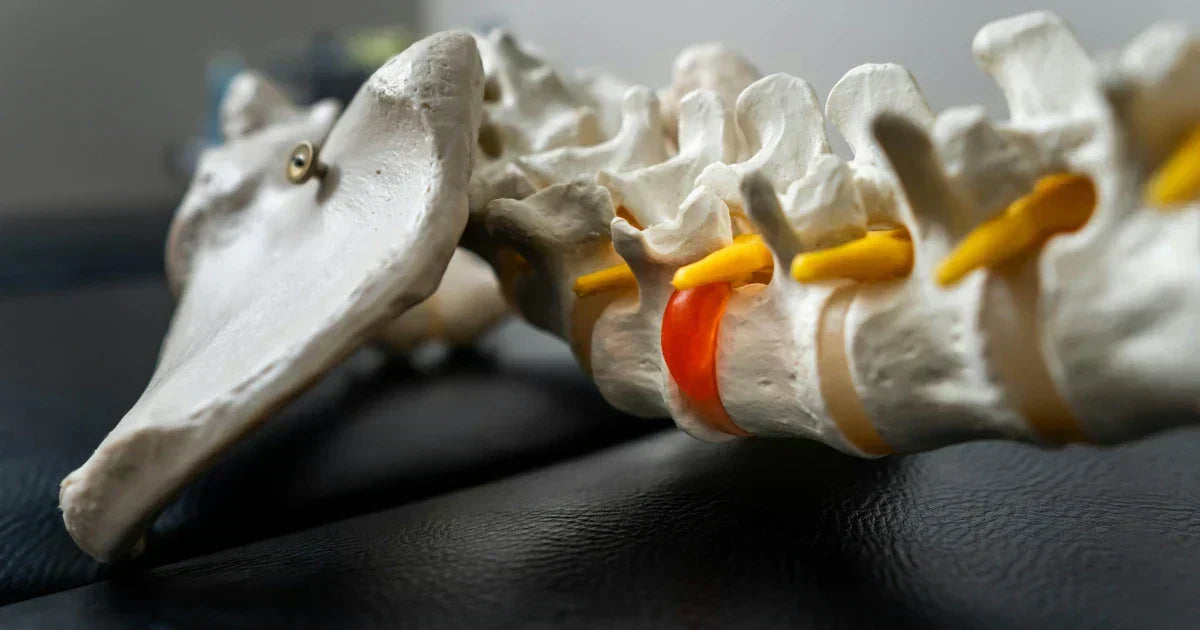
Sciatica is pain that travels along the path of the sciatic nerve, typically from the lower back or buttock down through the leg. What most people don't know is that this pain can come from three completely different places in your body, and each one needs a different fix. Below, I'll walk through what the sciatic nerve is, where it gets pinched, and how to figure out which spot is causing yours.
What is the sciatic nerve?
The sciatic nerve is the longest and thickest nerve in the human body. It starts in your lower back and travels all the way down the back of your leg to your foot.
It is not really one single nerve. It is made up of five smaller nerve roots that come out of your lower spine and pelvis, then join together into one thick cord. That cord leaves your pelvis through a gap between your tailbone area and your pelvic bone, then runs underneath (or in some people, through) a small hip muscle called the piriformis, located deep in your buttock. From there, it travels down the back of your thigh and eventually splits into two branches that continue into your lower leg and foot.
Because this nerve is so long and passes through so many structures, it has three distinct places where it can get pinched, and most people only ever check one.

Where can the sciatic nerve get pinched?
There are three separate spots where the sciatic nerve can get pinched:
- By a bulging or herniated disc pressing directly on the nerve
- At the nerve roots in your lower spine, where poor spinal alignment or arthritis puts pressure on the joints and squeezes the roots as they exit your lower spine
- At the piriformis muscle, deep in your buttock, where the nerve passes underneath it
Most people are aware of these three compression points. What is far less commonly addressed is why they develop in the first place. In many cases, chronic muscle tension in a hip muscle called the iliacus is quietly loading the spine, irritating the discs, and pulling the piriformis tight, all at the same time. Treating the compression point without addressing the iliacus is why sciatica so often comes back.
Can a herniated disc cause sciatica?
Yes. A herniated or bulging disc is the most common cause of sciatica. This is where the soft cushion between two vertebrae has bulged or ruptured and presses on a nerve root as it exits your spine, causing pain, numbness, or weakness that travels down your leg. Disc herniation alone accounts for up to 85% of sciatica cases.3
Where that pain shows up depends on exactly which nerve root is involved:
- L4: pain down the front of the thigh and inner shin, along with weakness in straightening the knee
- L5: pain along the outer thigh, outer calf, and top of the foot, with weakness lifting the foot or toes.
- S1: pain down the back of the thigh, into the calf and heel, along with weakness pushing the foot down and a weaker or missing ankle reflex.2
A few clues suggest the disc is the source. Pain that gets worse when you cough or sneeze, pain that shoots down the leg when you lift one of your straight legs while lying down (a test called the straight leg raise), and numbness that follows a clear line down the leg all point to a disc compressing the nerve root.
It is also worth noting that disc herniation does not always result from a single acute injury. Chronic loading of the disc over time is a common contributing factor, and one of the most common drivers of that loading is a tight iliacus pulling the pelvis into anterior tilt, often on one side, making the lower back twist and compress. This posture also compromises the ability of the deep core muscles to stabilize the spine effectively, leaving the discs in a more mechanically vulnerable position and more susceptible to injury over time, even from everyday activity.
This is why treatment that focuses solely on the disc, including surgical procedures that trim or remove the herniation, can provide significant relief but may not prevent the same injury from recurring. If the underlying cause was chronic muscle tension in the iliacus driving poor spinal alignment and reducing core stability, that mechanism is still in place after the disc is treated. Addressing the muscle tension driving the problem is often the missing step.
Can poor spinal alignment cause sciatica?
Yes, poor spinal alignment is a less commonly discussed cause of sciatic nerve compression. When the pelvis tilts forward, a position known as anterior pelvic tilt, it increases the natural curve in the lower back. That increased curve puts pressure on the facet joints of the lumbar spine and can compress the nerve roots where they exit the vertebrae, producing the same radiating pain, numbness, and weakness as disc-related sciatica. This alignment issue typically produces more symptoms when combined with arthritis in the spine that narrows the hole that the nerve flows through (the foramen) or a disc issue.
Unlike a disc herniation, this type of compression is often driven by muscle tension rather than the disc itself. The most common cause of anterior pelvic tilt is chronic tightness in the iliacus, a muscle that lines the inside of your pelvic bone. When the iliacus is tight, it pulls the pelvis forward and increases the lumbar curve, loading the spine even when you are not doing anything that would obviously strain your back.
This is an important distinction because it means the compression can often be reduced by addressing the muscle tension driving the alignment problem, not just focusing on the nerve irritation itself.
Can the piriformis muscle cause sciatica?
Yes, the piriformis is a small muscle that sits deep in your buttock, running from underneath your sacrum (the triangular bone at the base of your spine) to the outside of your hip (the greater trochanter on your femur). The sciatic nerve passes directly underneath this muscle, and in roughly 15% of people it passes through the muscle itself. When the piriformis becomes tight or inflamed, it can compress the sciatic nerve at this point, producing pain that typically starts deep in the buttock and can travel down the back of the thigh.
This is known as piriformis syndrome, and it is one of the most commonly missed causes of sciatica. Unlike disc-related sciatica, it rarely produces the clear dermatomal numbness pattern or reflex changes you would see with a nerve root compression. The pain tends to get worse with sitting rather than bending forward, and the straight leg raise test is usually negative.
What makes piriformis syndrome particularly difficult to treat in isolation is that the piriformis is rarely the root cause of its own tension. The piriformis attaches to the sacrum, which means it is directly affected by the position of the pelvis. When the iliacus becomes chronically tight, it pulls the pelvis into an anterior tilt. That shift in pelvic position places the piriformis under constant tension, regardless of anything the piriformis itself is doing.
This is why stretching the piriformis or using a massage ball alone often provides short-term relief, but the tightness keeps returning. The iliacus is still pulling the pelvis into the same position, and the piriformis has no choice but to follow. Releasing the iliacus first reduces tension in the piriformis and, with it, pressure on the sciatic nerve. This is why addressing the iliacus is often the missing step in treating piriformis-driven sciatica.
Why does sciatica keep coming back after treatment?
Sciatica often returns after treatment because the underlying muscle tension driving the compression is rarely addressed. The most common missed factor is chronic tightness in the iliacus, which continues to pull the pelvis out of alignment, loading the discs, reducing core stability, and tensioning the piriformis, long after the acute pain has settled.
In my clinical experience, the pattern is consistent. Someone gets treated for a herniated disc or piriformis syndrome, the acute pain settles, they return to normal life, and within weeks or months the same pain returns. In most of these cases, the disc or the piriformis is no longer the active problem. The iliacus is still pulling the pelvis into the same position that caused the overloading in the first place, and nothing in their treatment plan ever touched it.
The reason it gets missed is anatomical. The iliacus sits deep against the inner surface of the pelvic bone, in a location that foam rollers, stretching, and standard massage tools simply cannot reach. It needs direct, sustained pressure against that inner pelvic surface to actually release. This is the exact gap I built the Hip Hook to close. It is shaped specifically to reach the iliacus, making it possible to address the root cause of the tension driving the cycle.

How do I know what is causing my sciatica?
The three most useful clues are where your pain starts, what makes it worse, and whether you have any numbness or reflex changes.
- Disc-related compression: pain that starts in your lower back or travels down the leg following a clear path, and gets worse when you bend forward, cough, or sneeze
- Piriformis compression: pain that starts deep in the buttock and gets worse with sitting rather than movement
- Spinal alignment: a forward-tilted pelvis, an exaggerated lower back curve, and it is worth knowing that these patterns frequently overlap. It is common to have both disc loading and piriformis tightness present at the same time, and poor spinal alignment can be quietly contributing to both simultaneously. If you have been treated for one of these and your pain keeps returning, it is worth asking whether the others are also in play.
In many cases of recurring sciatica, what connects all three is chronic tension in the iliacus. Because the iliacus drives anterior pelvic tilt, loads the discs, reduces core stability, and tensions the piriformis all at once, it can be the single underlying factor showing up as multiple different symptoms. Addressing the iliacus is often what breaks the cycle when everything else has only provided temporary relief.
Frequently asked questions
What does piriformis syndrome feel like?
Piriformis syndrome typically feels like a deep ache in the center of one buttock that can spread from the glute and into the back of the thigh. It tends to get worse the longer you sit, especially on a hard surface, and improves with movement. Unlike disc-related sciatica, it rarely causes the clear numbness or reflex changes that follow a specific line down the leg. This is because the compression is happening at the piriformis muscle in the buttock, where the sciatic nerve passes underneath or through it, rather than at the nerve root in the spine.
Is piriformis syndrome the same as sciatica?
No. Sciatica describes pain that travels along the path of the sciatic nerve; it is a symptom, not a diagnosis. Piriformis syndrome is one cause of that symptom, where a tight piriformis muscle compresses the sciatic nerve in the buttock. It is one of the most commonly missed causes of sciatica, partly because it does not show up on MRI scans of the lumbar spine, which is where most diagnostic imaging focuses.
Is sciatica a diagnosis?
Not exactly. Sciatica is a description of where pain travels along the path of the sciatic nerve, from the lower back or buttock down through the leg. It is a symptom, not a diagnosis. The actual diagnosis is whatever is causing that nerve irritation, which could be a herniated disc, poor spinal alignment compressing the nerve roots, or the piriformis muscle compressing the nerve in the buttock. Each cause is a different problem that needs a different treatment plan, which is why identifying the source of compression matters as much as treating the pain itself.
Does the piriformis always cause sciatica?
Not always, but it is involved more often than most clinical assessments catch. The piriformis can compress the sciatic nerve in anyone when it becomes significantly tight or inflamed, as the sciatic nerve runs underneath (or through) the piriformis. In many cases, the piriformis becomes tight due to upstream tension in the iliacus pulling the pelvis out of alignment, meaning the piriformis is reacting to a mechanical problem rather than being the problem itself. In these cases, releasing the iliacus reduces tension in the piriformis and pressure on the sciatic nerve at the same time.
Is sciatica the same as SI joint pain?
No, but they can occur together. Sciatica describes pain traveling along the sciatic nerve from the buttock down the leg. SI joint pain originates from the sacroiliac joint and surrounding musculature. The overlap happens because the piriformis attaches directly to the sacrum adjacent to the SI joint, meaning piriformis tightness can irritate the SI joint and compress the sciatic nerve at the same time. Chronic tension in the iliacus is often the upstream driver of both, as it alters pelvic alignment and increases load on the SI joint and the piriformis simultaneously.
References
- Poutoglidou F, Piagkou M, Totlis T, Tzika M, Natsis K. Sciatic nerve variants and the piriformis muscle: a systematic review and meta-analysis. Cureus. 2020;12:e11531. doi:10.7759/cureus.11531
- Deyo RA, Mirza SK. Herniated lumbar intervertebral disk. New England Journal of Medicine. 2016;374(18):1763 to 1772.
- Bharadwaj UU, Varenika V, Carson W, et al. Variant sciatic nerve anatomy in relation to the piriformis muscle on magnetic resonance neurography: a potential etiology for extraspinal sciatica. Tomography. 2023;9(2):475 to 484.
- Al Al Shaikh M, et al. Comparison of pulsed radiofrequency and endoscopic piriformis release for refractory piriformis syndrome. Journal of Clinical Medicine. 2025;14(16):5908. doi:10.3390/jcm14165908
- Eureka Health. Piriformis syndrome vs sciatica: back pain difference test. Published 2025. eurekahealth.com
- Physio Pedia. Management of lower back pain related to lower cross syndrome. physio pedia.com. Accessed June 2026
- Brookbush Institute. Iliacus muscle: function, dysfunction, and rehabilitation. brookbushinstitute.com. Accessed June 2026
- Kim H, Park S, Lee J. Altered lower extremity muscle activity patterns due to iliopsoas tightness during single leg landing. PubMed Central. 2025. PMC11923245


If you’ve tried PT, massage, stretching, and the pain keeps coming back, the problem is likely not where you’re feeli...
- HSA/FSA eligible
- 60-day returns
- Free shipping
If you’ve tried PT, massage, stretching, and the pain keeps coming back, the problem is likely no...