


What Is Ischemic Compression? The Science of Prolonged Pressure and Releasing Tight Muscles
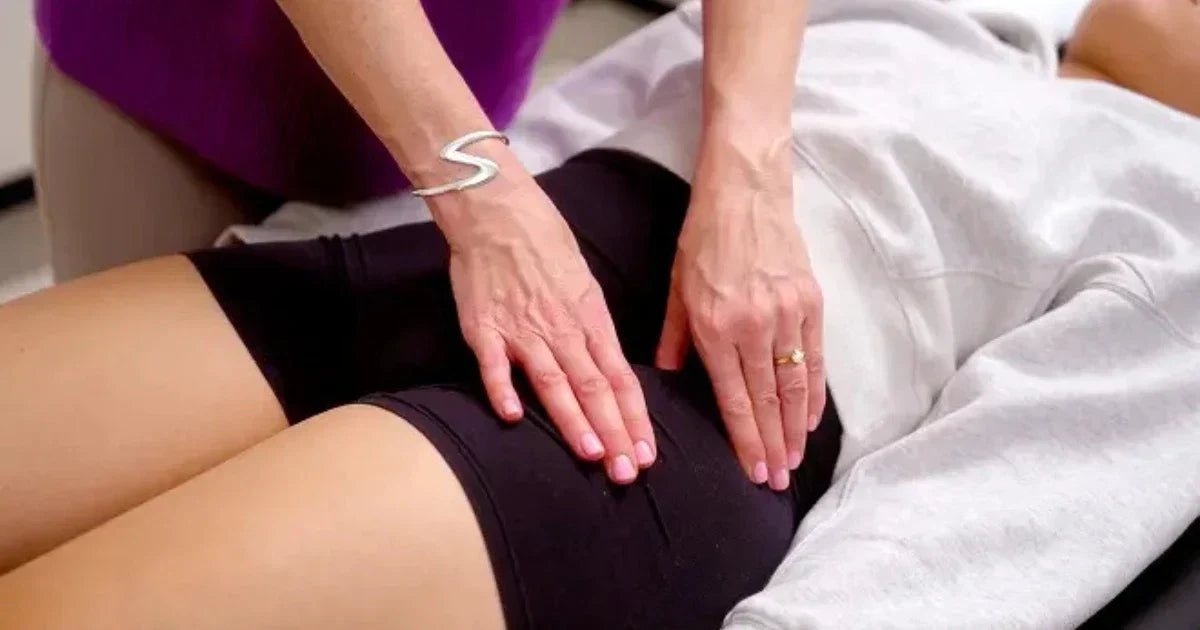
Ischemic compression is a manual therapy technique in which direct, sustained pressure is applied to a tense area within a muscle, without movement or rubbing, and held long enough for the muscle to let go, typically 90 seconds.
Ischemic compression is the term most people search for, and the one still used in most textbooks. It's also inaccurate. Throughout this article, I use prolonged pressure, which describes what's actually happening and why it works.
Physical therapists have used prolonged pressure for decades as one of the most effective hands-on tools for treating muscle tension and myofascial trigger points, what most people call muscle knots. It is not a trend, a wellness gimmick, or a new invention. It is an established therapeutic technique with a substantial body of peer-reviewed research behind it.
Why "Ischemic" Is a Misnomer
The name comes from the original explanation for why the technique worked, and that explanation has not held up.
When Travell and Simons first described ischemic compression in 1983, the instruction was to press hard enough to blanch the tissue, then release. The idea was that cutting off blood flow and then restoring it would produce a flush of fresh circulation into the area, called reactive hyperemia, and that this flush was the therapeutic event.
There's a problem with that logic. The tense, taut region of muscle you're pressing on is already poorly perfused before you ever touch it. Research using microdialysis has shown that the tissue at an active trigger point has a measurably different biochemical environment than healthy muscle nearby: lower pH, and elevated levels of inflammatory and pain-signaling substances including bradykinin, CGRP, and substance P.1 Deliberately adding ischemia to tissue that is already hypoxic is not a plausible mechanism for making it better.
Simons revised his own position. In the 1999 second edition of the Trigger Point Manual, he renamed the technique trigger point pressure release and changed the instruction: instead of heavy, blanching pressure, apply pressure only to the first barrier of resistance and hold there while the barrier yields.2 That is a fundamentally different model: a barrier-release model rather than a vascular-flush model. This shows that more isn't better with this technique.
Current thinking has moved away from circulation-based explanations entirely, toward the nervous system: the sustained pressure sends a steady signal that, over time, prompts the nervous system to stop guarding.
None of this means the technique doesn't work. It does, and the research is clear on that point. It means the original explanation for why it works was wrong, and the name it left behind is misleading. Prolonged pressure describes what you're actually doing.
What Is Muscle Tension and What Causes It?
A tight muscle isn't just a muscle that's been worked hard. Muscle tension is the brain maintaining a partial, submaximal contraction as a protective response. The muscle is, in a sense, stuck in a guarded state. The nervous system has determined it should hold this area tight.
That last point matters more than it sounds, and it comes up again later in this article: the tension is protective. Your nervous system is doing it on purpose. That single fact shapes how much pressure you should use and why more isn't better.
Common Causes of Muscle Tension
Among the most common causes of muscle tension are:
- Static positions. Remaining in the same position for longer periods of time, such as prolonged sitting, keeps muscles shortened for hours on end. Over time, the nervous system treats that shortened state as the new baseline, maintaining tension even when you stand.
- Overuse. Repetitive use of the same muscles from activities like running, cycling, or weightlifting can create and reinforce tightness, particularly when muscles aren't adequately released or recovered between sessions.
- Instability. If an area is overly mobile from an injury or genetic hypermobility, muscles will develop tension in an attempt to stabilize the joints, especially when lack of strength exists.
- Underuse. Muscles that are rarely asked to lengthen or work through full range tend to settle into a shortened resting state.
- Stress. The fight-or-flight response causes the body to brace. The hip flexors, neck, chest, and shoulders are among the first muscles to contract under psychological stress, which is why chronic stress and chronic tension so often coexist.
- Old injuries. When one area is injured, the body compensates. The surrounding muscles take over, and those compensation patterns can persist as tension long after the original injury has healed.
- Guarding around a painful area. The body will tighten around anything it perceives as vulnerable, such as a sore joint, a healing surgical site, or an area that hurt once and might hurt again.
- Pregnancy and postpartum changes. Pregnancy creates instability in the pelvis as a natural process of childbirth. The surrounding muscles protect this instability by creating muscle tension, and that tension lasts past childbirth.
- Habitual asymmetry. Carrying a bag on one side, always crossing the same leg, or habitually shifting weight onto one hip seem minor in isolation. Repeated daily over months or years, they create asymmetrical loading patterns that the brain remembers as the new normal, eventually creating tension on the overloaded side to manage the imbalance.
Muscle Tension Is Not Always a Trigger Point
These two things get used interchangeably, and they aren't the same.
Tension without a discrete trigger point is diffuse. The muscle feels tight, restricted, and often tender when you press on it, but pressing on it doesn't send pain anywhere else. This is extremely common, and it is still worth treating as this tension affects the function and alignment of the body.
A trigger point is more specific: a contracted band within the muscle fibers that feels like a knot or a hard nodule. When pressed, trigger points often produce pain either at the point of pressure or in a completely different area, called referred pain. That's why a tight muscle in your hip can create symptoms in your knee, your lower back, or even your foot.

Trigger points are further described as active, already producing symptoms you'd notice without pressing, or latent, meaning they're there and tender on palpation but not currently generating pain on their own.
Here's the practical takeaway: all of these respond to prolonged pressure. You do not need to correctly identify which one you have in order to benefit from treating it. That distinction matters for a clinician writing a chart note. It does not change what you should do with your hands.
A pilot study found that over 90% of young adult participants had iliacus tender points, with prolonged sitting and running or biking associated with increased risk.3 A survey of pain physicians found that a majority considered available treatments for myofascial pain insufficient.4 That gap is exactly what prolonged pressure addresses.
How Does Prolonged Pressure Work?
Sustained, unmoving pressure gives the nervous system a steady, non-threatening input from a specific location for long enough that it stops guarding there.
The key words are sustained and non-threatening. Both are necessary. Pressure that moves (rolling, rubbing, vibrating) never stays in one place long enough. Pressure that's too intense reads as a threat, and a nervous system that feels threatened does not release. Instead, it braces harder.
How to Apply Prolonged Pressure
Finding the Spot
You don't need to find a textbook trigger point. You need to find a spot that's tender and makes anatomical sense for your symptoms.
Palpate the general area with your fingers or a tool and feel for tissue that is tender, dense, or noticeably different from the tissue around it. If pressing on it feels tense or painful, that's a strong signal you're in the right place. Muscles that are tight are usually painful to touch. If it's simply tender and the location makes sense given where your symptoms are, that's enough to work with.
A physical therapist can formally confirm trigger points through manual palpation, noting sensitivity, twitching, or referred pain responses. But for self-treatment, tender plus anatomically sensible is a workable standard.
How Much Pressure
More is not better. Gentle pressure works as well as hard pressure.
This runs against almost everything in the recovery-tool market, and it's the single most important thing on this page. The reason there's tension in the first place is that your nervous system is trying to protect you. If you press hard enough that your body has to defend itself against you, you have confirmed the threat it was already responding to. It will not let go.
Press to the point where you feel resistance and tenderness, and no further. The working test is simple: you should be able to breathe normally and stay relaxed. If you're holding your breath, tensing elsewhere, or gritting your teeth, back off. You have not lost anything by using less pressure. You've made release more likely.
Deep, easy breathing during the hold is part of the technique. It's the signal that tells the nervous system this is safe.
How Long to Hold
Within the first 30 seconds, you should notice something start to change: the sharpness easing, the tissue softening slightly, tenderness backing off. That early shift is your confirmation you're in the right place with the right amount of pressure, and should continue to hold.
Continue holding the pressure for an additional 60 seconds for a total of 90 seconds. Not because the muscle is watching a clock, but because most people are poor judges of what's happening in their own body and let go far too early. They feel the first bit of relief and assume the work is done, when it isn't. Ninety seconds gets you past that premature stop and into a full release.
It also sets a ceiling. Longer isn't better, and there's no reason to sit on one spot for five minutes. Ninety seconds, then move on or come back to it later.
If nothing changes at all in the first 30 seconds, don't push harder. Either you're not quite on it and should shift slightly and re-explore, or you're pressing hard enough that your body is guarding against you.

What Release Feels Like
Warmth. A softening or melting sensation. A noticeable decrease in tenderness under the same amount of pressure. The dense spot or nodule becoming smaller, less distinct, or disappearing. Sometimes a spontaneous deeper breath.
It is usually less dramatic than people expect, and it does not require pain to happen.
How Prolonged Pressure Compares to Stretching, Foam Rolling, and Massage
Stretching lengthens the muscle as a whole, but it doesn't address the specific tense sections within the muscle where the guarding is concentrated. Stretching a muscle that hasn't been released can also pull on tissue that isn't ready to lengthen. Flexibility is not the same as release.
Foam rolling applies pressure, but it rolls along the muscle rather than holding on one spot. The motion doesn't allow the sustained input the nervous system requires to let go. You get temporary circulation improvement and some short-term relief, but not the neurological reset that produces lasting change.
Percussion massage guns follow the same logic: rapid vibration stimulates the muscle but doesn't stay in one place long enough for the release mechanism to engage. They can feel productive without producing the change you're after.
Manual massage can deliver prolonged pressure when a skilled therapist holds sustained pressure on one point, and many do. The limitation is practical rather than technical: a therapist can only do this during a session, at a cost of time and money that makes the frequency needed for lasting results difficult for most people to sustain. Deep muscles like the iliacus also make it hard for even trained hands to maintain the right angle for a full 90 seconds.
| Prolonged pressure | Stretching | Foam rolling | Percussion | Manual massage | |
|---|---|---|---|---|---|
| Stationary or moving | Stationary | Moving | Moving | Vibrating | Usually moving |
| Time on one spot | 90 seconds | Not applicable | Seconds | Seconds | Varies |
| Targets a specific tense band | Yes | No | Partially | No | Yes, if the therapist holds |
| Reaches deep hip flexors | With the right tool* | No | No | No | Yes, if the therapist has skill in this area |
| Self-administered | Yes | Yes | Yes | Yes | No |
| Cost per session | One-time cost | None | One-time cost | One-time cost | Ongoing |
*Reaching the deep hip flexors, such as the iliacus, requires a tool designed for that purpose, such as the Hip Hook™ (Mark®).
What Does the Research Say About Prolonged Pressure?
Aletha's External Randomized Controlled Trial
Aletha conducted an IRB-approved randomized controlled trial with 25 adults aged 25–55 who had chronic lower back pain. Participants were divided into two groups: an intervention group (n=15) that used the Hip Hook for 90 seconds, three times per week for four weeks, and a control group (n=10) that performed standard hip flexor stretches for the same duration and frequency.
After a single 90-second session:
- Participants reported a 27% reduction in pain (p=0.021, Cohen's d=−0.70)
- 71% of participants experienced reduced muscle tension, with an average reduction of 24% (p=0.002, Cohen's d=−1.04)
- 60% reported less pain after just one use
After four weeks of consistent use (3×/week):
- 19% reduction in pain (p=0.046), compared to no significant change in the stretching control group
- 29% improvement in sleep duration (p=0.004)
- A trend toward improved physical function on a chair stand test; the control group saw no change
Pain relief was sustained up to two weeks after the study ended, even after participants stopped using the device. The control group did not experience this sustained effect.
The control group performed a conventional hip flexor stretching routine and saw no statistically significant reduction in pain. This is consistent with what physical therapists have observed clinically for years: stretching engages the muscle, but it does not release the neurological holding pattern at the root of chronic tension.
LEARN MORE: Read the White Paper
Independent External Research
Aletha's findings are consistent with independent peer-reviewed research. A cohort study published in the Journal of Manipulative and Physiological Therapeutics found that four weeks of ischemic compression produced significant improvements in pain, mobility, and strength in participants with chronic trigger points, with further improvement observed at a 6-month follow-up.5
This validates the mechanism itself. The peer-reviewed literature supports what physical therapists have known from clinical practice: sustained pressure applied to a tense muscle produces measurable results that other modalities don't replicate.
Where a Tool Helps: The Hip Hook and the Iliacus
Most muscles you can reach with your own hands. A few you can't, and the iliacus is the clearest example.
The Hip Hook (Mark) was designed for the iliacus and psoas: two hip flexor muscles that sit deep inside the pelvis, are difficult to access manually, and are nearly impossible to reach effectively with conventional tools. Its angled tip and lever design apply steady pressure to these muscles where they pass through the lower abdominal and pelvic region. You control the amount of pressure by adjusting your body position, and because the tool stays in place, you can hold that pressure for the full 90 seconds without your hands fatiguing or the angle drifting.
This matters because the iliacus is one of the most commonly overlooked drivers of widespread musculoskeletal pain. When the iliacus holds tension, it pulls the pelvis into an anterior tilt. That position changes loading through the lumbar spine, hips, and knees, alters the mechanics of the kinetic chain, and can inhibit the glutes and other stabilizing muscles from activating properly.6 7
Releasing the iliacus with prolonged pressure isn't just about hip comfort. It's about restoring the foundational alignment from which everything else in the body operates.

Is Prolonged Pressure Right for You?
Prolonged pressure is most effective when the underlying problem is muscle tension. Specifically, this means when the nervous system is maintaining a holding pattern the body hasn't been able to resolve on its own or through conventional methods like stretching or foam rolling.
A few signs point toward muscle tension as the driver:
- Pain that shifts or refers to another area when you press on a specific spot
- Restricted range of motion on one side compared to the other
- Symptoms that temporarily worsen with sustained positions like sitting or standing for long periods
- Tenderness in a specific spot that reproduces your familiar pain
If imaging such as X-ray or MRI has come back normal but you still experience discomfort, muscle tension is worth investigating. Even if there are findings on an Xray or MRI, that doesn't mean that finding is the source of your pain. It could be muscle tension. Tense muscle tissue doesn't appear on standard imaging, but it can contribute meaningfully to pain and restricted movement.
These are not diagnostic criteria, and a clinician should evaluate you if you're uncertain. But if your pattern fits, prolonged pressure is a conservative, low-risk approach worth discussing with your provider and trying alongside whatever else you're doing.
When Not to Use It
Consult a healthcare provider before using prolonged pressure if you have had recent surgery, an active infection, a blood clotting condition, or are taking blood thinners, have osteoporosis, or are pregnant.
Stop immediately if you feel numbness, tingling, throbbing, or a sharp radiating sensation. Those indicate you're on a nerve or blood vessel rather than muscle tissue. Reposition and try again slightly off that spot.
Prolonged pressure is not appropriate over an acute injury, an open wound, an area of unexplained swelling, or any area where you have new pain you haven't had evaluated.
Frequently Asked Questions
What does prolonged pressure feel like?
Pressure, tenderness, and often warmth. As the release begins, you may feel a softening or melting sensation, and the same amount of pressure will start to feel less tender. The initial discomfort typically eases within the first 30 seconds if the pressure is at the right level and you're able to stay relaxed. It should not feel like something you have to endure; if it does, you're pressing too hard.
Does prolonged pressure have to hurt to work?
No. This is the most persistent myth about the technique. Gentle pressure works as well as hard pressure, and pressing harder can actively prevent release, because the tension exists as a protective response in the first place. Aim for tenderness you can breathe through, not pain you have to brace against.
Why is it called ischemic compression if the tissue is already ischemic?
Because of a mechanism proposed in 1983 that has since been revised. The original theory was that restricting and then restoring blood flow produced the therapeutic effect. In fact, the tense tissue is already poorly perfused before pressure is applied, and Simons himself renamed the technique trigger point pressure release in 1999 while changing the recommended pressure from heavy to light. The name persists in textbooks and search engines; "prolonged pressure" is the more accurate description.
How is prolonged pressure different from a deep tissue massage?
Deep tissue massage moves through muscle layers using friction and sustained movement. Prolonged pressure is stationary: pressure is held in one spot for roughly 90 seconds without movement. That distinction is what allows the release to occur. Most massage modalities, including deep tissue, don't hold long enough on a single point.
How long should I hold prolonged pressure on one spot?
About 90 seconds. You should feel something begin to change within the first 30 seconds, but most people release too early, so 90 seconds is a reliable target. It also functions as a ceiling, as more isn't necessarily better.
How often should I use prolonged pressure?
Research supports three times per week as an effective frequency for producing lasting change with chronic tension. Many people find daily use beneficial, particularly with deeply held patterns. Start with one session per day on any given area, allow the muscle time to respond between sessions, and adjust based on how your body feels.
How long do results from prolonged pressure last?
Results build with consistency. Many people notice relief after a single session, and those improvements deepen with regular use. Independent research has shown improvements in pain, mobility, and strength maintained at a 6-month follow-up with consistent application. The more regularly prolonged pressure is applied, the more the nervous system's baseline tension pattern shifts over time.
Is prolonged pressure safe to do at home?
Yes, when done correctly. The key principles: use enough pressure to feel tenderness but not so much that you can't breathe and stay relaxed, hold steady without movement for about 90 seconds, and avoid areas near nerves and blood vessels, which announce themselves through numbness, tingling, or throbbing. Stop if you feel those. See the contraindications above before starting.
How is prolonged pressure different from trigger point therapy?
Trigger point therapy is an umbrella term for techniques that address trigger points. Prolonged pressure, what textbooks call ischemic compression and what Simons renamed trigger point pressure release, is one specific technique within that category, distinguished by sustained, stationary pressure. Other approaches use needling, spray-and-stretch, or movement-based interventions. Among non-invasive options, prolonged pressure has one of the stronger evidence bases in the literature.
Do I need a trigger point to use prolonged pressure, or does general tightness count?
General tightness counts. You don't need a distinct nodule or a referral pattern for prolonged pressure to help. Both diffuse tension and discrete trigger points respond to the same approach, which is why you don't need to diagnose yourself precisely before starting.
Can prolonged pressure help areas other than the lower back?
Yes. The technique applies anywhere you can reach muscle tissue and hold steady pressure. Because the iliacus and psoas influence pelvic position and hip mechanics, tension in these muscles can contribute to discomfort well beyond the hip itself, including the lower back, SI joint, knees, and along the path of the sciatic nerve. Prolonged pressure can also be applied to other muscle groups, including the suboccipital muscles, upper traps, and pec minor, for conditions including neck pain, tension headaches, and shoulder tightness. Even forearm tension can be released to help with issues like tennis elbow and soleus releases can help with plantar fasciitis, for example. If you have a specific diagnosed condition, talk to your clinician about whether this is appropriate for you.
References
- Shah JP, Danoff JV, Desai MJ, Parikh S, Nakamura LY, Phillips TM, Gerber LH. Biochemicals associated with pain and inflammation are elevated in sites near to and remote from active myofascial trigger points. Arch Phys Med Rehabil. 2008;89(1):16–23. https://doi.org/10.1016/j.apmr.2007.10.018
- Simons DG, Travell JG, Simons LS. Myofascial Pain and Dysfunction: The Trigger Point Manual, Vol 1, 2nd ed. Baltimore: Williams & Wilkins; 1999.
- Liu Y, Palmer JL. Iliacus tender points in young adults: a pilot study. J Am Osteopath Assoc. 2012;112(5):285–289. https://doi.org/10.7556/jaoa.2012.112.5.285
- Schneider C, et al. Challenges in the management of myofascial pain: a survey of pain physicians. BMC Musculoskelet Disord. 2013;14:204. https://doi.org/10.1186/1471-2474-14-204
- Cagnie B, et al. Effect of ischemic compression on trigger points in the neck and shoulder muscles in office workers: a cohort study. J Manipulative Physiol Ther. 2013;36(8):482–489. https://doi.org/10.1016/j.jmpt.2013.07.001
- Pizol GZ, Miyamoto GC, Cabral CMN. Hip biomechanics in patients with low back pain: a systematic review. BMC Musculoskelet Disord. 2024;25:415. https://doi.org/10.1186/s12891-024-07463-5
- Ceballos-Laita L, et al. The effectiveness of hip interventions in patients with low-back pain: a systematic review and meta-analysis. Braz J Phys Ther. 2023;27(2):100502. https://doi.org/10.1016/j.bjpt.2023.100502
- Koth C, Evolve Well Research Partners. Randomized controlled trial of the Mark device for chronic lower back pain: acute and chronic outcomes including pain, muscle tension, sleep, and physical function. Aletha Health internal clinical study, n=25. 2024.


If you’ve tried PT, massage, stretching, and the pain keeps coming back, the problem is likely not where you’re feeli...
- HSA/FSA eligible
- 60-day returns
- Free shipping
If you’ve tried PT, massage, stretching, and the pain keeps coming back, the problem is likely no...