


Hip Hook vs. Amazon Knockoffs: Comparing Design, Materials, and Clinical Validation
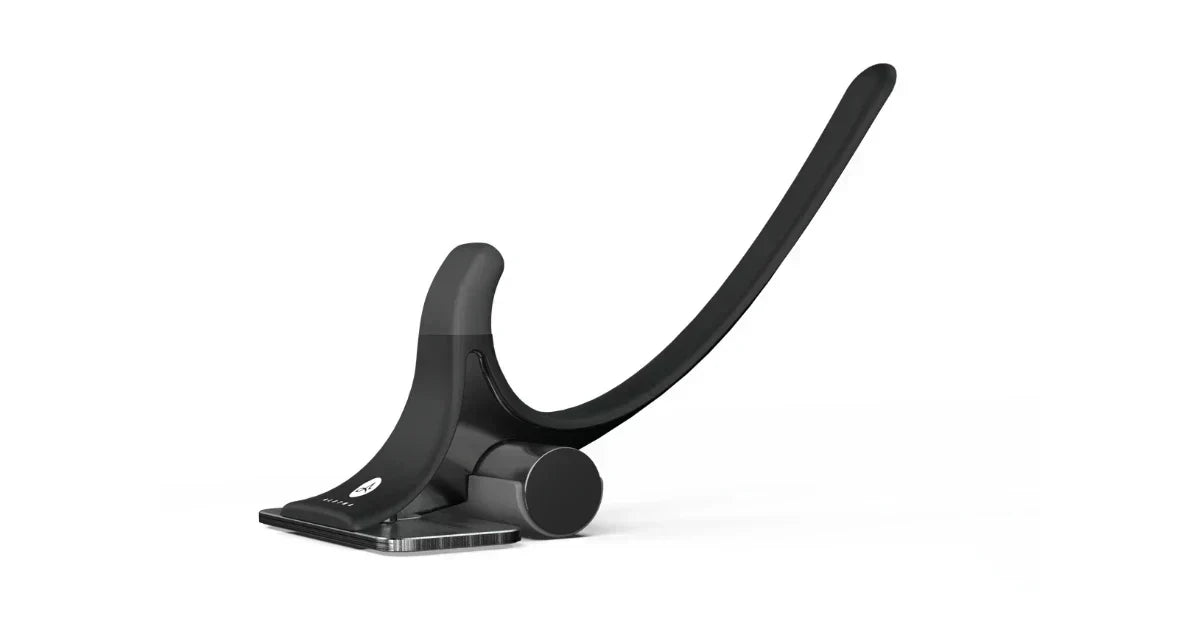
Search "hip hook" online, and you'll find a cluster of tools priced between $15 and $50 that look strikingly similar to the original. They share the same basic shape: a handle attached to a lever with a pressure tip designed to reach the iliacus, the deep hip flexor that attaches inside the pelvis. At a glance, it's easy to wonder if you're looking at the same product at a fraction of the cost. But you're not. The design concept may be similar, but that's where the comparison ends.
The Hip Hook™ (Mark®) was designed by a licensed physical therapist through years of clinical patient testing, manufactured in the USA with precision-engineered materials, and validated in an external randomized controlled trial. Knockoffs replicate the basic shape, but lack the clinical development behind the geometry, the material quality, and the support system that makes the original effective.
Knockoffs have no clinical development behind them, no research backing, and no support system.
How Does the Hip Hook Work?
The Hip Hook was designed by Christine Annie, a licensed physical therapist with 25 years of clinical experience treating chronic hip and back pain. It works by applying sustained pressure directly to the iliacus, a deep hip flexor muscle that lines the inner surface of the pelvis, using a patented lever mechanism. This technique is called ischemic compression2, and it's the same approach physical therapists have used for decades in clinical settings. Pressing down on the handle rotates the tip into the iliac fossa, and holding that position for 90 seconds allows the muscle to physiologically relax.
What makes the Hip Hook effective isn't just the concept. It's the precision of the execution. The size and shape of the pressure tip ensure contact with the muscle is firm and effective without uncomfortable, sharp edges. The tip shape was designed to mimic a skilled practitioner's thumb, which Christine found to be most effective in her clinical work.
The tip materials went through extensive testing to ensure the pressure was as comfortable as possible while still being therapeutically effective. A difference of five durometers in hardness makes the difference between an effective release and discomfort or irritation.
The angle at which pressure is delivered is just as important as the tip. How the tip curls around the pelvic bone and lands in the right location on the muscle requires years of prototypes and testing. Since the trajectory of the tip is determined by not only the shape of the device but also the pivot shape, location, and friction, every variable has to be precisely calibrated for the tool to reliably reach the target and deliver effective pressure.
The shape of the lever arm is key to positioning the Hip Hook correctly on your body and reaching the handle with enough control to allow for a relaxed, effective release.
These are the key variables that were refined through years of clinical testing on patients in Christine's PT practice. When any of those variables are off, the tool either fails to reach the target anatomy or delivers pressure at an angle that's ineffective or uncomfortable. Getting them right required the clinical knowledge to know what "right" actually means.
In an external randomized controlled trial, participants who used the original Hip Hook experienced a 27% reduction in pain after just one 90-second session, and 71% saw reduced muscle tension.1
LEARN MORE: Read the White Paper
How Well Do Hip Hook Knockoffs Work?
Hip Hook knockoffs generally fail to deliver consistent therapeutic results because they attempt to replicate the shape, but without the clinical expertise behind the geometry. The problem isn't the concept. It's the execution.
Most are manufactured cheaply, often in China, using 3D-printed or low-grade materials that aren't designed for the pressures involved in sustained myofascial compression. Users regularly report handles that flex or snap, pressure tips that are the wrong size or shape to reach the target, and lever and pivot angles that deliver pressure at incorrect trajectories.
The companies behind them have no background in physical therapy, no clinical testing process, and no understanding of why the specific geometry of the original matters. The result is a tool that may look similar, but can't reliably deliver a therapeutic outcome.
Beyond the tool itself, there's no support structure: no research validating their design, no instructional videos, no app to guide proper use, and no physical therapists available to answer questions about technique or individual concerns. The goal was replication of the product, not replication of the outcome.
Hip Hook vs. Knockoffs: Side-by-Side Comparison
The core difference isn't price. It's clinical development, material quality, and accountability. Here's how they compare across the factors that determine whether a tool like this actually works.
| Hip Hook | Knockoffs | |
|---|---|---|
| Designed by | Licensed physical therapist, 25+ years clinical experience | No clinical expertise; unknown manufacturers |
| Design process | Years of patient testing and clinical refinement in a PT practice | No clinical development; design variations with no evidence of clinical testing or efficacy validation |
| Materials | High-quality, durable materials sourced within the USA | Typically cheap 3D-printed or low-grade materials; frequently reported to break with use |
| Manufacturing | Made in the USA | Largely manufactured in China |
| Clinical validation | External RCT: 27% pain reduction after one 90-second session* | None |
| Instructions & guidance | Detailed manual, how-to videos, iOS Companion App with PT-guided programs | None, or minimal |
| Professional support | Team of licensed PTs available to answer questions | None |
| Part of a larger system | Yes, designed to work within Aletha's full-body release approach | No, standalone product only |
| Patented design | Yes | No |
| Price | $199 | $15–$50 |
*In a randomized controlled trial of 25 participants with chronic lower back pain. Results may vary.
Should I Choose the Hip Hook or a Knockoff?
If you're looking for the cheapest way to put pressure near your hip, the knockoffs will give you options. Some of them may provide temporary relief. But if you're dealing with real, persistent hip or low back pain, the kind that's been building for months or years and hasn't responded to stretching or other tools, the quality of the instrument, the expertise behind its design, and the support available to guide you through using it properly all matter.
The Hip Hook was built by someone who spent 25 years in a PT clinic understanding why people stay in pain and what it takes to actually change that. The knockoffs were built by companies that saw a product and a market opportunity. A tool like the Hip Hook, built through years of clinical testing and validated in an external randomized controlled trial, is likely to produce meaningfully different results than one built without any of that development behind it.
Who should buy the Hip Hook?
- Anyone dealing with chronic hip or low back pain that stretching and other approaches haven't resolved
- Anyone who wants a clinically designed, research-backed tool with guidance on how to use it properly
- People who want access to a full-body system (tools, programs, and licensed PT support), not just a single product
If the investment feels steep, consider the alternative math: one Hip Hook versus recurring physical therapy visits, chiropractor appointments, or massage sessions for the same issue. It's a one-time purchase, made in the USA, with a team invested in making sure you get results.
The Original Hip Hook
The Hip Hook is the original clinically designed tool for iliacus release, developed by a licensed physical therapist through years of patient testing, backed by a randomized controlled trial, and made in the USA. Every Hip Hook includes detailed instructions, how-to videos, access to the Aletha iOS companion app, and customer support from a team of physical therapists.
Aletha's Hip Hook has been tested on hundreds of bodies to ensure it performs consistently across a wide range of body types. Its clean design doesn't compromise on durability.
It comes with a 1-year warranty against manufacturing defects. When you purchase it, you have 60 days to return it if you are not satisfied. The Aletha team, made up of physical therapists and movement professionals, is available to answer questions about technique and proper use. The companion app guides you through not only how to find these muscles, but why they matter and how to get the most out of your Hip Hook (and the other Aletha products).
The Hip Hook is also part of a larger full-body system, the Aletha product line, designed to address the interconnected tension patterns that drive chronic pain, not just to release a single muscle in isolation.
Key Takeaways
- Knockoffs attempt to copy the Hip Hook's pivoting lever design, but without the clinical expertise, patient testing, or quality materials that went into the original.
- The Hip Hook was invented by Christine Annie, a licensed physical therapist with 25+ years of experience, and refined through years of testing in a PT clinic; specifics like tip geometry and lever angle directly affect how well the tool reaches the iliacus.
- The Hip Hook is made in the USA with durable, high-quality materials; most knockoffs are cheaply manufactured, often in China, with 3D-printed components that are frequently reported to break with use.
- In a randomized controlled trial, participants using the Hip Hook experienced a 27% reduction in pain after one 90-second session.*
- Every Hip Hook purchase includes detailed instructions, how-to videos, the Aletha iOS app, and access to a team of physical therapists, none of which knockoffs provide.
- The Hip Hook is part of a larger full-body release system designed to address chronic pain at its root; knockoffs have no clinical development, support system, or methodology behind them, and no published evidence of therapeutic outcomes.
*In a randomized controlled trial of 25 participants with chronic lower back pain. Results may vary.
Frequently Asked Questions
Are Hip Hook knockoffs as effective as the original?
Most knockoffs attempt to copy the Hip Hook's pivoting lever design, but without the clinical expertise behind the geometry. The size and angle of the pressure tip, the lever length, the contact surface: these variables were refined through years of PT clinical testing. Knockoffs replicate the concept without that development process, which typically results in tools that either don't reach the target anatomy or deliver pressure less effectively.
Why does the Hip Hook cost $199 when knockoffs are under $50?
The price reflects what's behind the product: a patented design developed by a licensed physical therapist with 25+ years of experience, USA manufacturing with quality materials, clinical validation through an external randomized controlled trial, and access to instructional resources and a licensed PT support team. Knockoffs offer none of that. The comparison isn't a $199 tool vs. a $30 tool; it's a clinically developed system vs. a reverse-engineered copy.
Do Hip Hook knockoffs break easily?
Many buyers report that knockoffs, particularly 3D-printed versions, crack or break during normal use. The Hip Hook is manufactured in the USA with durable materials and is built to withstand consistent daily use. It also comes with a 1-year warranty; most knockoffs do not.
What support do I get with the Hip Hook that knockoffs don't offer?
Every Hip Hook comes with a detailed instruction manual, step-by-step how-to videos, and access to the Aletha iOS companion app, which includes PT-guided programs for proper use and progressive routines. Aletha also has a team of licensed physical therapists available to answer questions about technique and address individual concerns. None of this exists with knockoffs.
Is the Hip Hook part of a larger program?
Yes. The Hip Hook is the foundation of Aletha's full-body release system, which also includes the Range (neck, chest, and upper trap release), the Orbit (glute and hip release), and the Band (strength & stability). The system is designed around a clinically developed sequence: release muscle tension first, then realign and reactivate. This sequence addresses the interconnected patterns driving chronic pain. Knockoffs are standalone tools with no system or methodology behind them.
References
- Reiner, S. (2025). Aletha Health: Revolutionizing therapeutic strategies for back pain and physical performance [White paper]. Aletha Health. https://alethahealth.com/pages/white-paper
- Aguilera, F. J. M., Martín, D. P., Masanet, R. A., Botella, A. C., Soler, L. B., & Morell, F. B. (2009). Immediate effect of ultrasound and ischemic compression techniques for the treatment of trapezius latent myofascial trigger points in healthy subjects: A randomized controlled study. Journal of Manipulative and Physiological Therapeutics, 32(7), 515–520. https://doi.org/10.1016/j.jmpt.2009.08.001
- Pizol, G. Z., Miyamoto, G. C., & Cabral, C. M. N. (2024). Hip biomechanics in patients with low back pain, what do we know? A systematic review. BMC Musculoskeletal Disorders, 25, 415. https://doi.org/10.1186/s12891-024-07463-5
- Ceballos-Laita, L., Estébanez-de-Miguel, E., Jiménez-Rejano, J. J., Bueno-Gracia, E., & Jiménez-Del-Barrio, S. (2023). The effectiveness of hip interventions in patients with low-back pain: A systematic review and meta-analysis. Brazilian Journal of Physical Therapy, 27(2), 100502. https://doi.org/10.1016/j.bjpt.2023.100502


If you’ve tried PT, massage, stretching, and the pain keeps coming back, the problem is likely not where you’re feeli...
- HSA/FSA eligible
- 60-day returns
- Free shipping
If you’ve tried PT, massage, stretching, and the pain keeps coming back, the problem is likely no...